Poultrymad© Lincolnshire Buff
Originally developed in the 1860's from the Shanghai breed (or Cochin as it
later became known) and mated with several different breeds including Dorking
and Wheaten Old English Game, they were never standardised by an official body
but associated with the county of Lincolnshire.
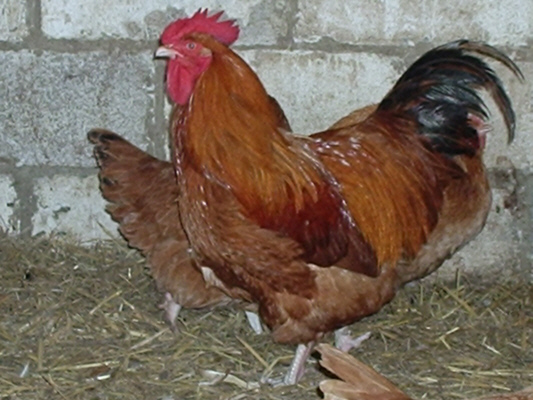
Lincolnshire Buffs were an important part of Lincolnshire agriculture before
1900 but the breed disappeared, as did many other poultry breeds. The
Lincolnshire Buff was fast growing, easily raised, was a good winter layer and
with its white-pigmented skin made an excellent table bird.
By 1920 the breed had just about disappeared from farms, often being replaced
by the Buff Orpington. When William Cook introduced the Buff Orpington in 1894,
he claimed to have developed it without Lincolnshire Buff blood. Many doubted
his statement but due to the rise in popularity of the Orpington, the result was
the decline of the Lincolnshire Buff.
Since 1987, Lincolnshire Agricultural College has been conducting breeding
trials of the Lincolnshire Buff and in the late 1990's a club was formed and the
members pressed for the standardisation of the breed. The standard for
Lincolnshire Buff has been drafted to emphasise the distinct difference from the
Orpington.
The Lincolnshire differs from the Orpington in being a longer-backed bird
which carries its tail lower and has much tighter feathering. An obvious
difference is in the legs which should carry an extra claw making it 5 toed.
This extra toe must be well separated from the conventional rear toe and be
pointing upwards. |